LEt’s talk
about your rendering needs
Feel free to use the contact form or email us directly
— we love hearing from our clients.
contact@molot.studio

LEt’s talk
about your rendering needs
Feel free to use the contact form or email us directly
— we love hearing from our clients.
contact@molot.studio
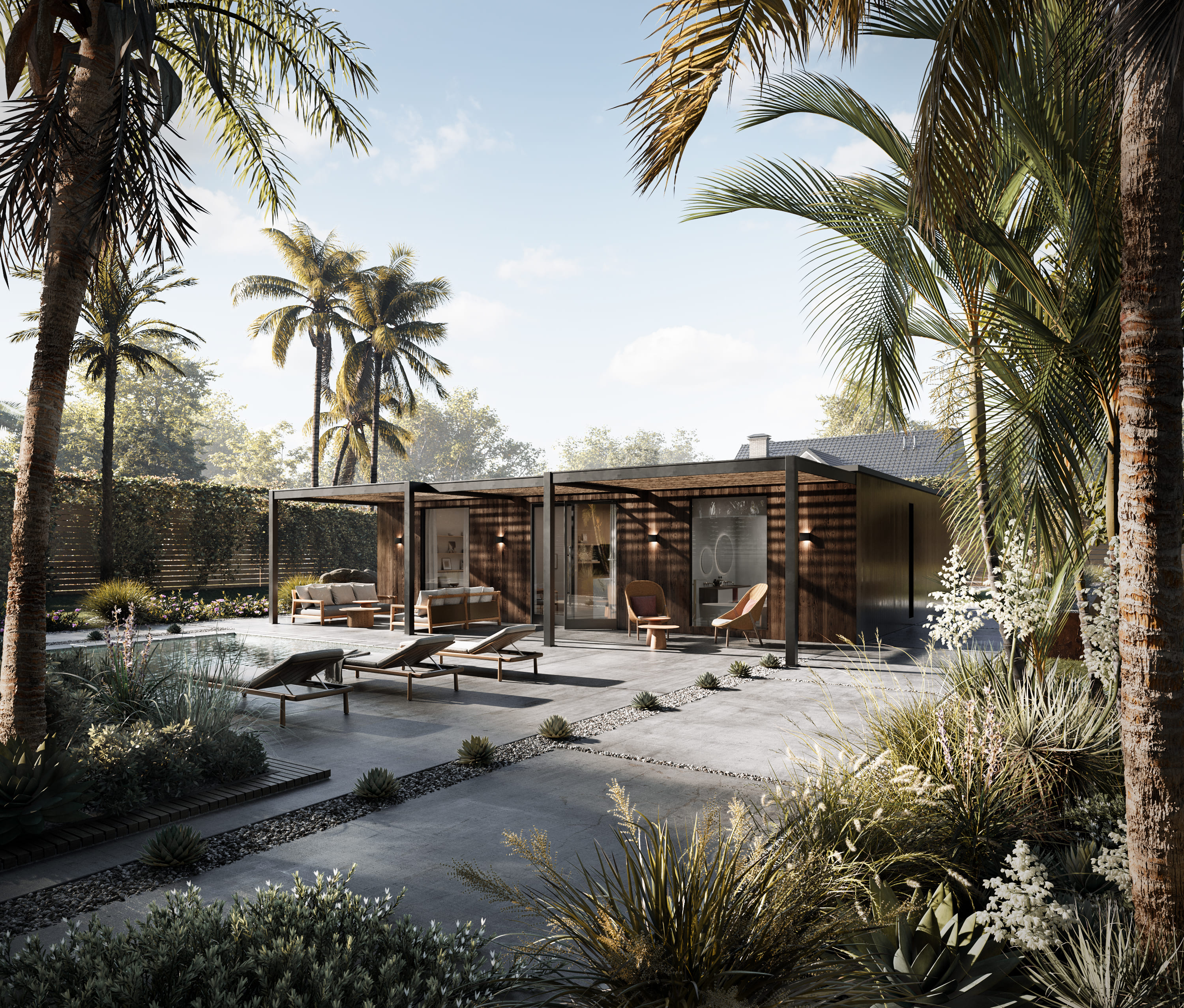
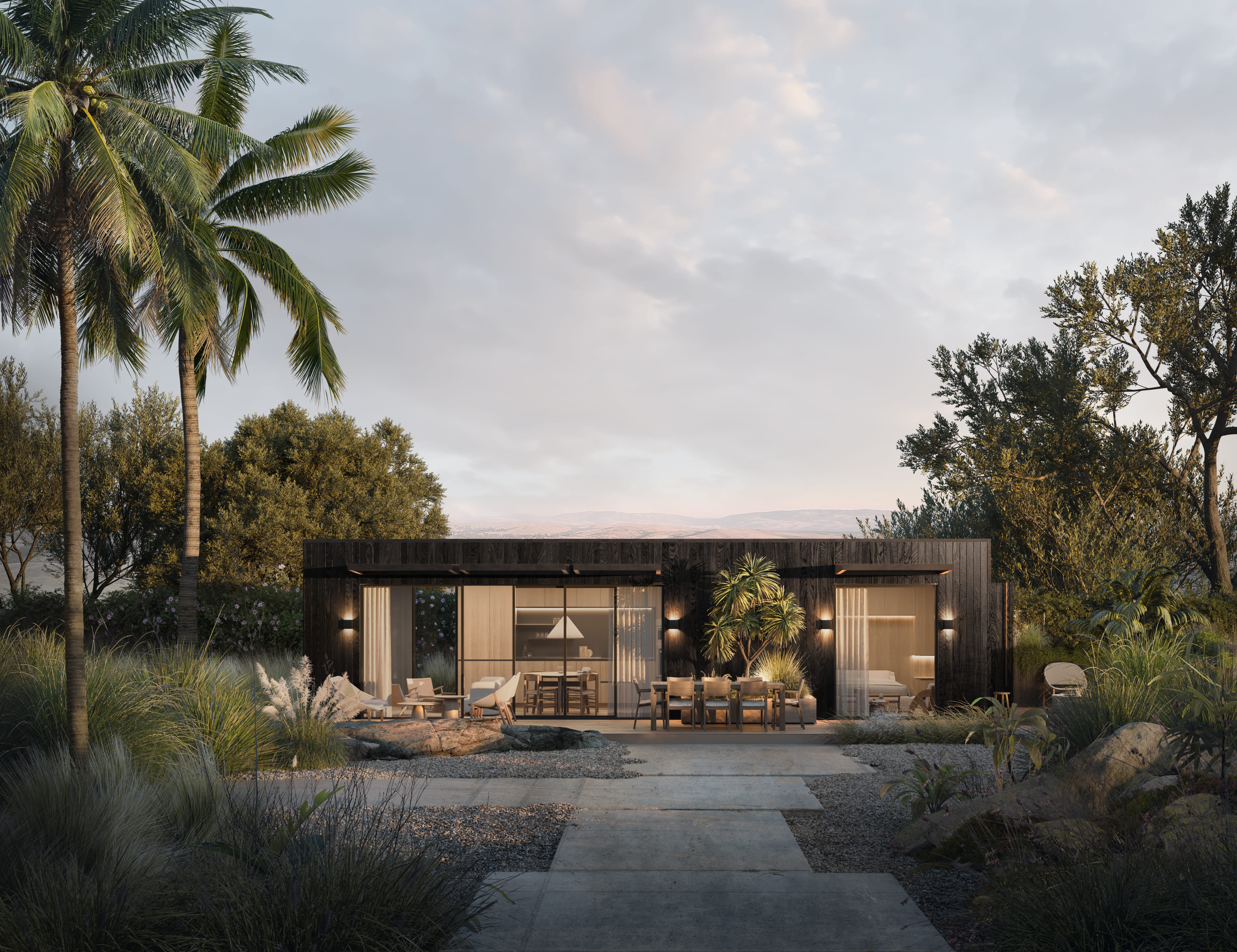
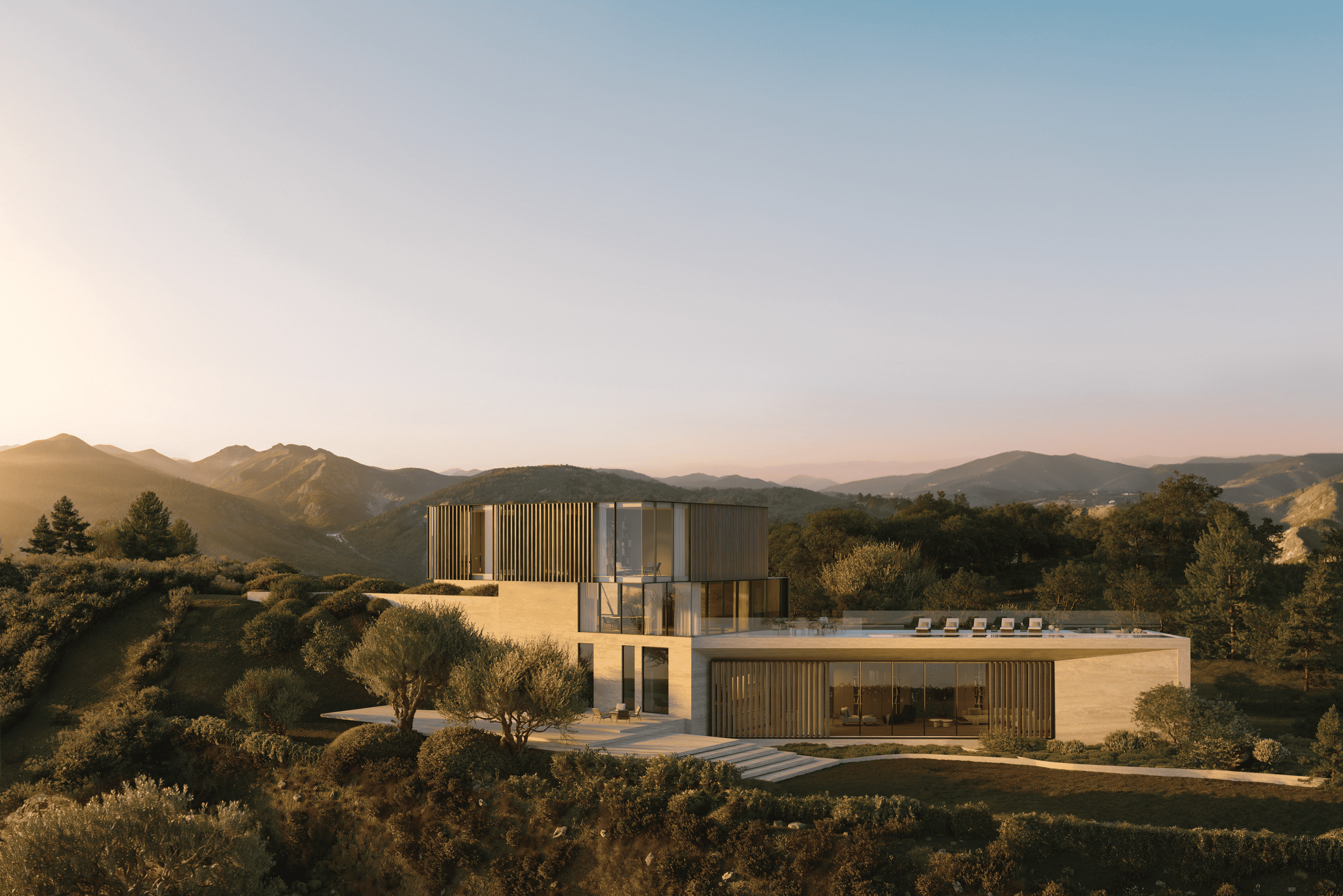
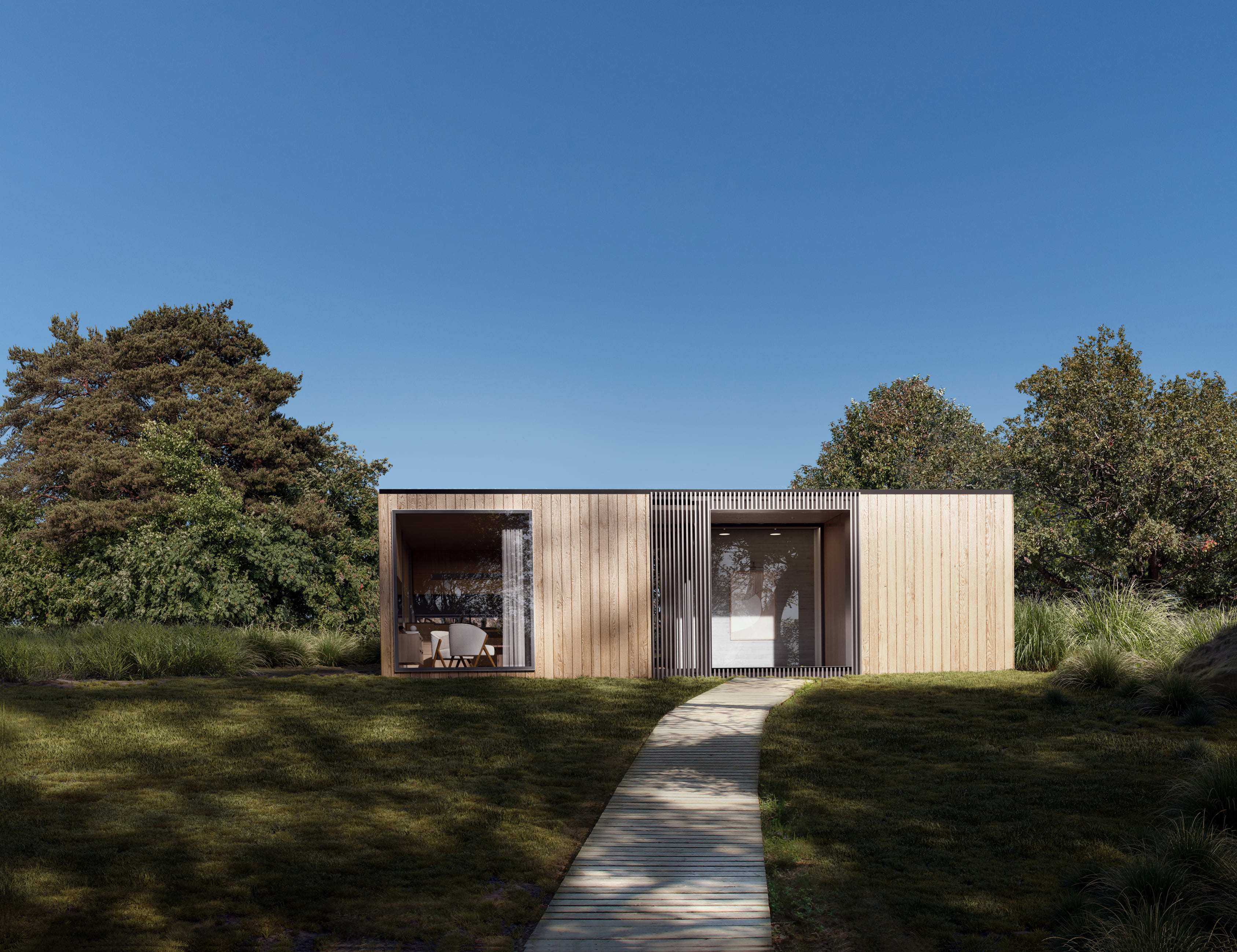
Lakehouse is a cinematic short film about a house that doesn’t exist yet. The story follows John as he leaves a busy city office and escapes to a peaceful lakeside retreat, where Ella is waiting for him.
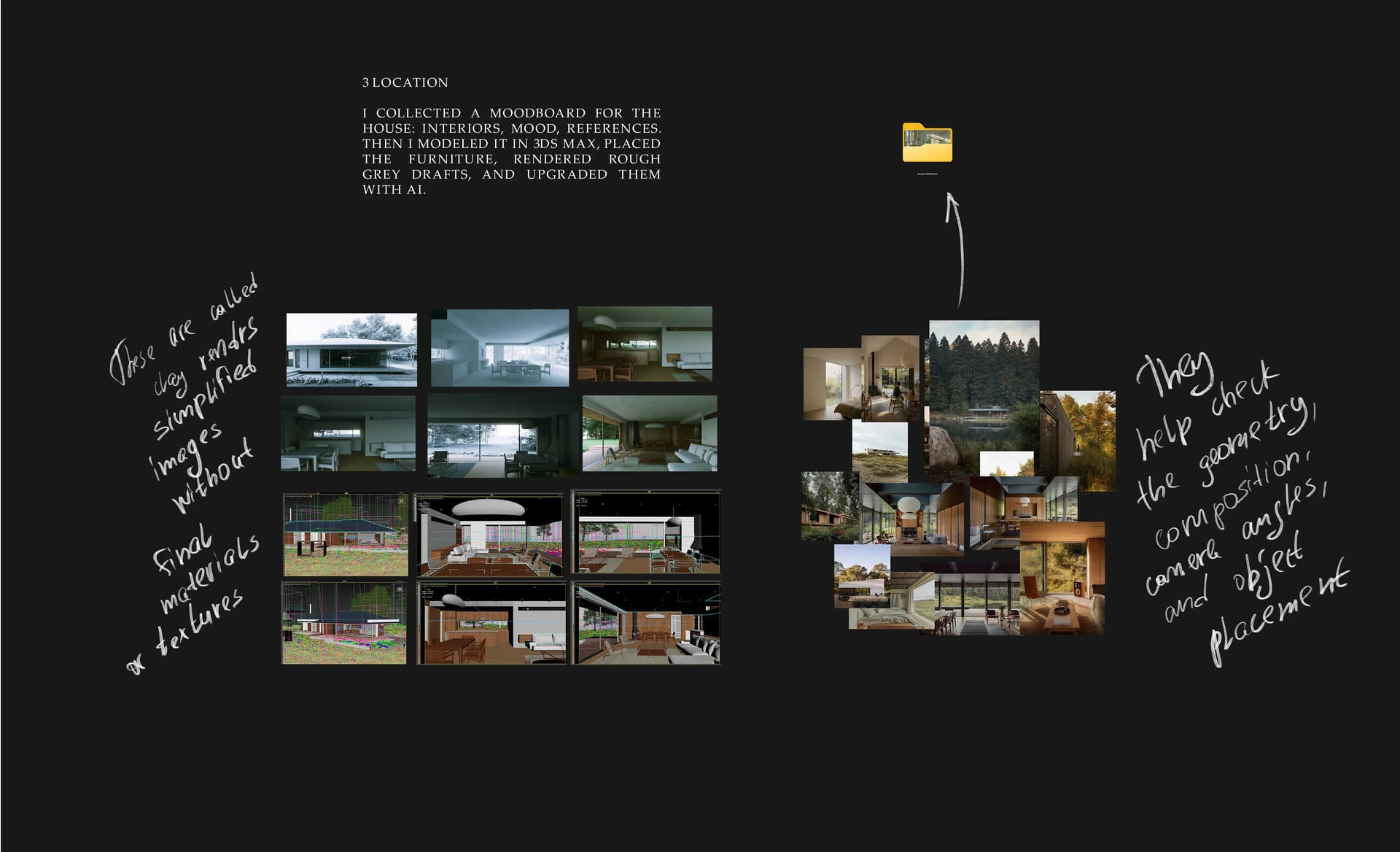
Unlike traditional architectural animation, this project combines precise 3D modeling, cinematic storytelling, and AI-generated imagery. We first recreated the house in 3ds Max, developing its architecture, interiors, furniture, and camera compositions. AI was then used to transform these carefully designed scenes into a realistic film with consistent characters, environments, and atmosphere.
Our goal was to explore a new way of presenting architecture – creating an emotional story around a space before it has even been built.
Services
Architects • AI video generation service for architects by MOLOT, 3D architectural animation, interior animation services Real estate • 3d animation walkthroughCountry
USATimeline
5 daysYear
2026Team




1. Creating a film around architecture that doesn’t exist
The house existed only as a digital concept. We needed to create a believable environment that could serve as the setting for a cinematic story, while keeping the architecture accurate across different scenes and camera angles.
2. Maintaining consistency in AI-generated scenes
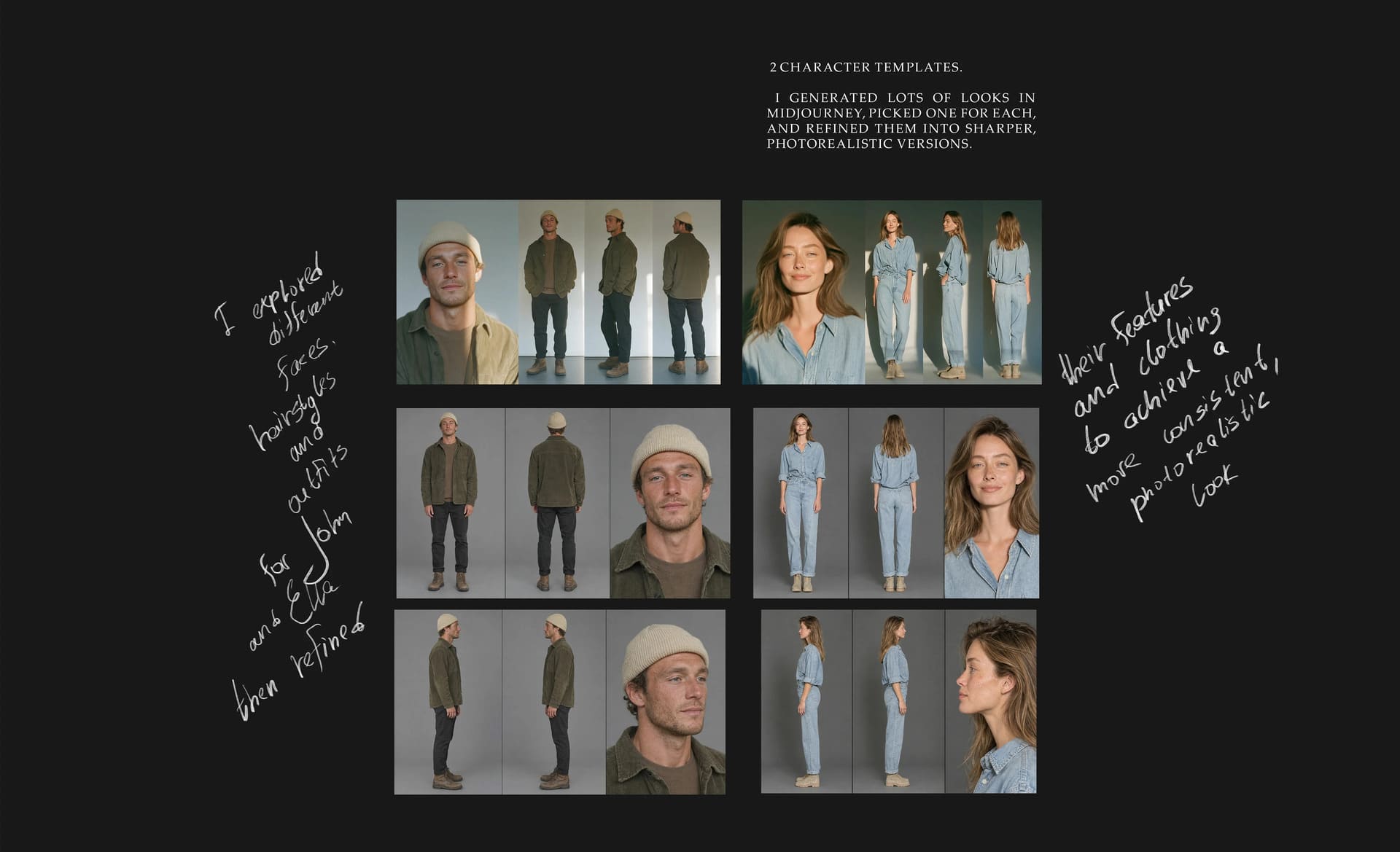
One of the biggest challenges was keeping the characters, clothing, interiors, and small details consistent throughout the film. AI can generate beautiful individual shots, but making them feel like parts of the same story requires much more control.
3. Combining architectural accuracy with storytelling
The film needed to feel like a real movie rather than a collection of architectural renders. Every scene had to contribute to the narrative while naturally showcasing the house, its atmosphere, and the surrounding landscape.
1.Building the architectural foundation in 3D
We modeled the house and its interiors in 3ds Max, including furniture, materials, and architectural details. Clay renders helped establish accurate geometry, camera angles, and compositions before moving into AI production.
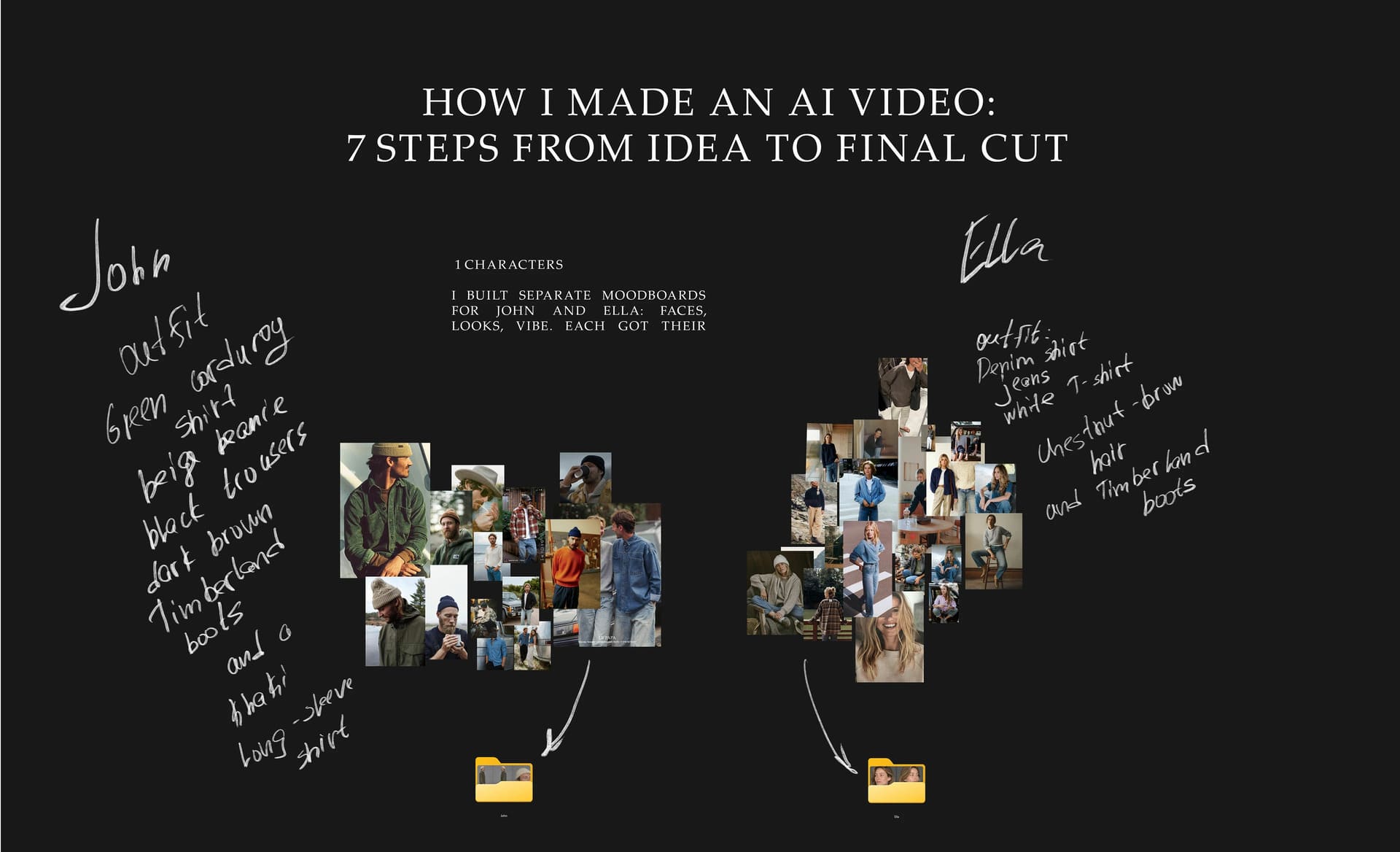
2. Developing characters and visual references
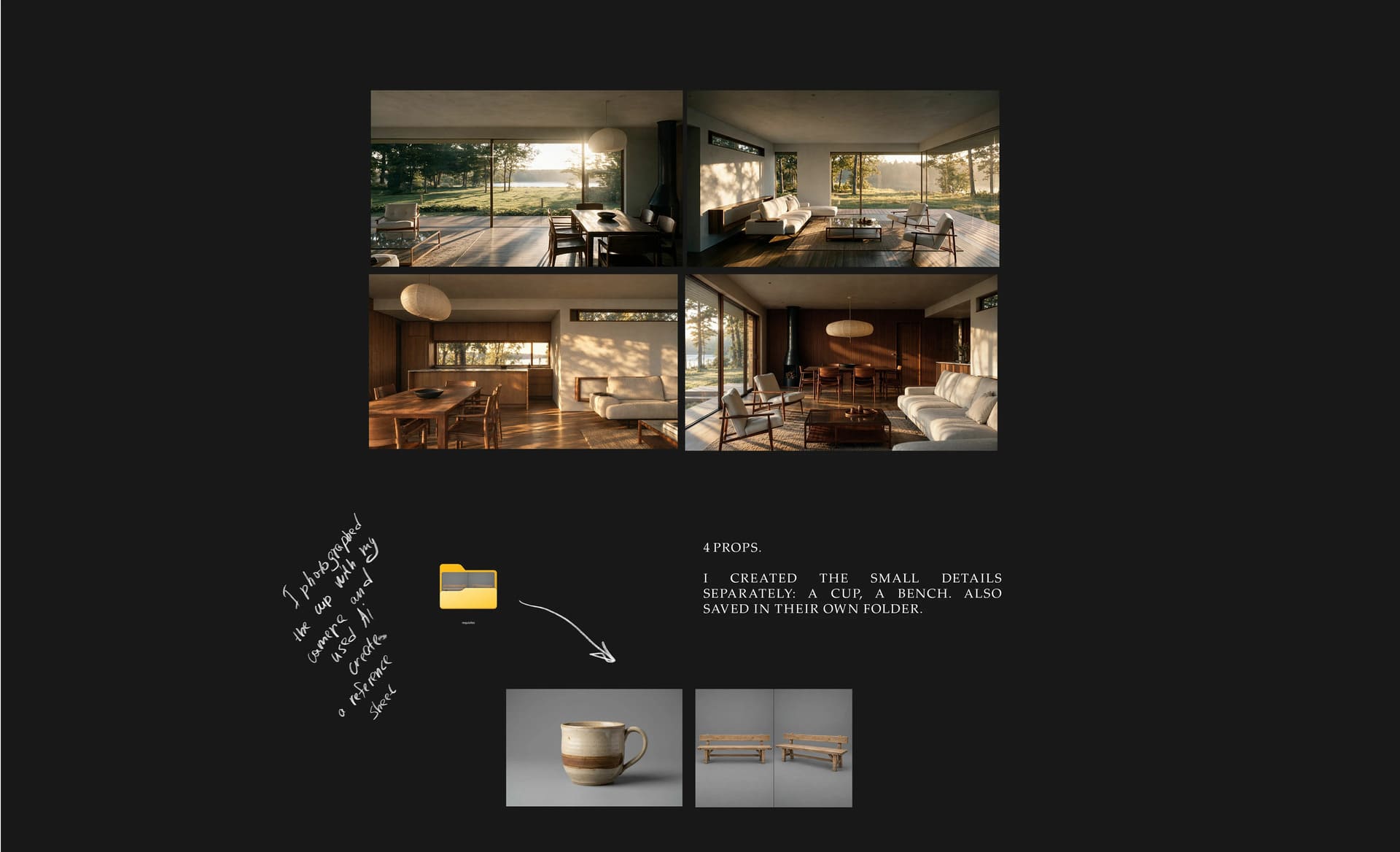
We created separate moodboards for John and Ella, defining their appearance, clothing, and personalities. Consistent character references and individual 3D props helped maintain continuity throughout the generated scenes.
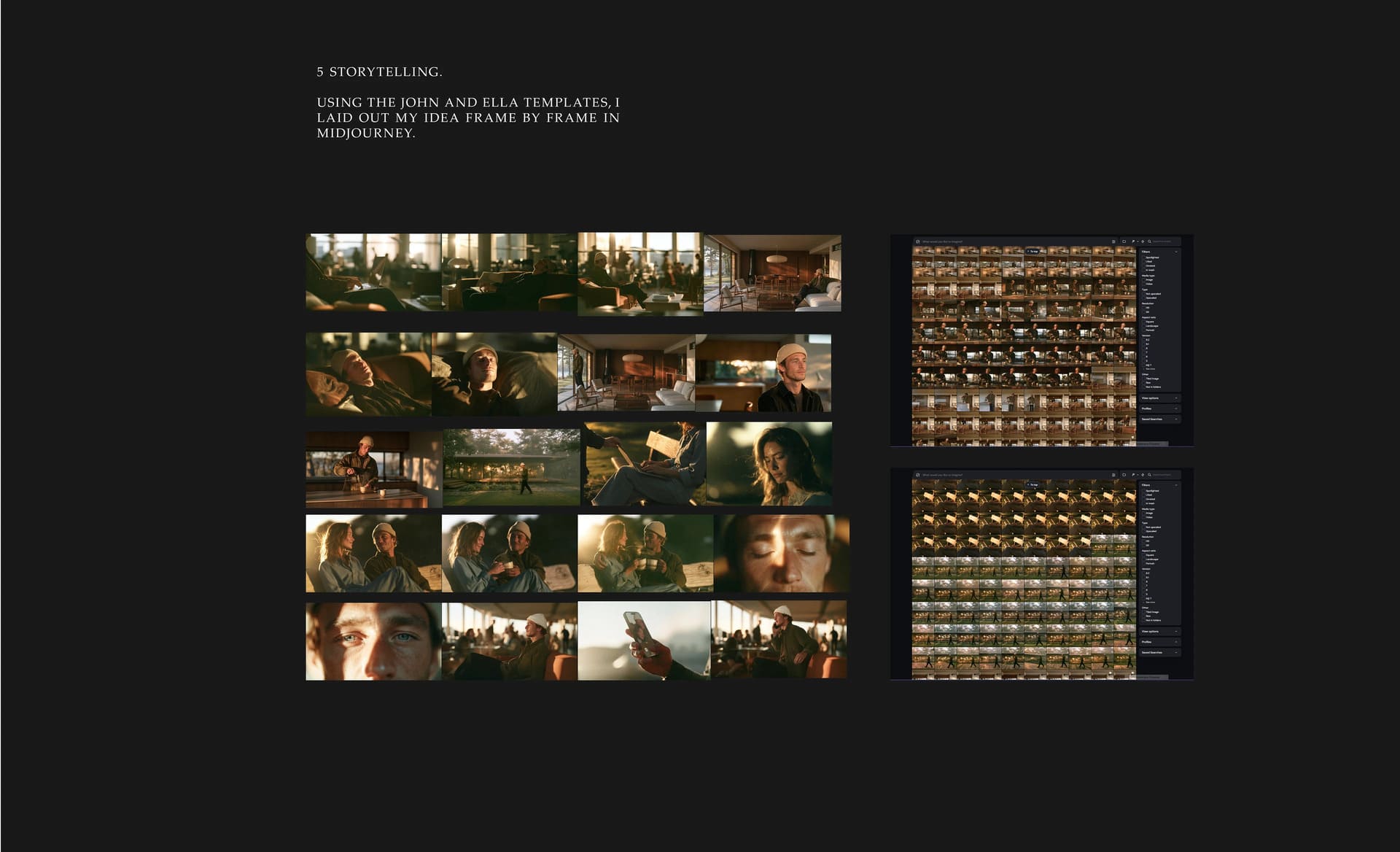
3. Directing the story frame by frame
OWe developed the narrative through storyboards, defining the sequence of events, camera perspectives, and emotional moments. AI tools helped transform these references into cinematic images, which were then animated and assembled into the final film.
1. A cinematic film built around unbuilt architecture
The final result presents the house through a personal story, allowing viewers to experience its atmosphere rather than simply observe its design.
2.A new approach to architectural marketing
The published case includes positive feedback from the The project demonstrates how 3D visualization and AI filmmaking can work together to create engaging content for architects, developers, and real estate brands before construction begins.
3. A repeatable creative production workflow
We developed a workflow combining architectural modeling, character development, storyboarding, AI generation, and animation. This gives our team a foundation for producing future architectural films with greater creative flexibility.

“We’ve collaborated with Molot Studio on a number of highly demanding international projects, often under extremely tight deadlines. What consistently stands out is their ability to combine speed with quality without compromising the design intent.
From large-scale developments to complex workplace interiors, the team has always shown a strong understanding of atmosphere, composition, and architectural communication. On several occasions, they delivered in days what would normally take weeks.
Their flexibility, reliability, and collaborative approach make them a valuable creative partner, especially on projects where timing and presentation are critical.”
“When we started this project, we thought the hardest part would be making the house look real. Turns out, the house was the easy part!
Getting John to look like the same person in every scene, keeping Ella’s clothes consistent, and making sure the furniture didn’t suddenly change between shots – that was the real adventure.
We spent a lot of time building references, testing different approaches, and sometimes starting scenes all over again. But that’s what made it interesting.
My favourite part was seeing our 3D model slowly turn into something that felt like an actual movie. The house was no longer just architecture. It became a place where a story could happen.”

Founder | Art director
MOLOT STUDIO
Feel free to use the contact form or email us directly
— we love hearing from our clients.
contact@molot.studio